Rats and mice in Laingholm
About 300 people in the Waima to Laingholm area are registered trappers. The reason is the same reason a roof-space job here rarely stays finished without proofing.
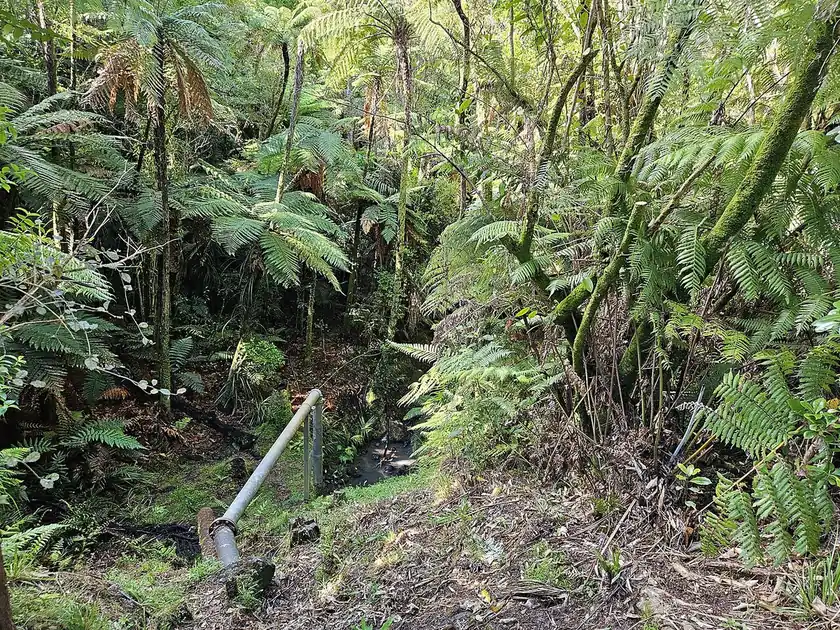
In 2016, so the story goes, people in this part of the Ranges realised that trapping one backyard at a time was not working. Rats reinvaded from the next property.
Waima to Laingholm Pest Free, formed in 2017 according to the Alliance, targets rats and possums, asks residents to keep cats in at night and offers discounted or donated traps with a volunteer buddy who delivers and explains the trap. The article puts about 300 registered trappers across the group, within an alliance of over 30 groups and about 4,000 volunteers.
Source: Pest Free Waitākere Ranges AlliancePredator Free NZ's own account dates the group's start to 2016. Either way, the date is less important than the point: it exists because backyard trapping alone failed.
A suburb inside the habitat
Of Laingholm's 442 ha, 324 ha is in a Significant Ecological Area overlay, 15 ha is mapped flood plain and 8.3 km of permanent stream runs through it (measured 17 November 2026; boundaries are generalised).
Source: Auckland Council open dataNearly three-quarters of the suburb is ecological overlay. Houses are not beside the bush. Most of them are in it. A separate local group, Restoration Ruatuna, lists trapping and baiting among its activities.
What follows for a house here
- Reinvasion is normal. After treatment, animals arrive again from the next section or the reserve. That is not failure, it is the setting. A proofed roof and a monitored station outside are the realistic answer.
- Roofs and trees. The Department of Conservation describes the ship rat as a good climber and common in lowland forest. A canopy that overhangs the roof gives them an easy way in. Trim back what you can.
- Cats and baiting. The local group asks residents to keep cats in at night. For us the issue is bait: tell us about every pet, and stations are chosen and placed with that in mind. Read the safety and products page.
- Coordination. If your neighbours trap, mention it. A technician can work with the existing pattern.
Group trapping plus a house job
The group's buddy system is good at what it does, which is reducing the number of animals near houses. It cannot reach into a roof space or find the gap above the garage door. A technician inspects the building, quotes in writing and sets stations in the right places, and you keep your trap on the section. The two approaches fit together, and none of this competes with neighbours who are trapping.
Cost
A standard house job is about $199 to $300 in published Auckland sources, and big or severe infestations can reach $1,000 or more (checked 17 November 2026). Proofing is quoted after inspection. Details sit on the rats and mice price page.
Before the visit
Clear access to the hatch if you have one, and note any spot where you hear movement. Trim branches that touch the roof, and tell us which neighbours trap, since the technician can then plan around existing lines. Bring a list of the pets and any poultry on the property, and say where food is stored. If you have borrowed a trap from the group, say where it is set, so stations are not placed on top of it. The roof-space page explains what the technician does once inside.
Should I wait and see if the group's traps reduce the noise?
If it is a single rat on the section, perhaps. If the sound is in the roof or wall, waiting lets a nest become established.
Is the problem worse in winter?
Rats look for warm, dry shelter when it turns cold, and bush-edge houses are the obvious choice. Autumn is a sensible time to check roofs and proof.
Where next
See the Laingholm suburb page, the neighbouring Titirangi rat page or the hub on rats and mice. To arrange a technician, call 09 872 7624. An assistant takes your details and a specialist rings back. The callback form works too.
Sources for this page
Where a source describes the place rather than pests, the pest relevance is our own reading.