Ants in West Auckland
Ants in West Auckland homes: how to recognise the problem, what a treatment involves and what the work tends to cost.
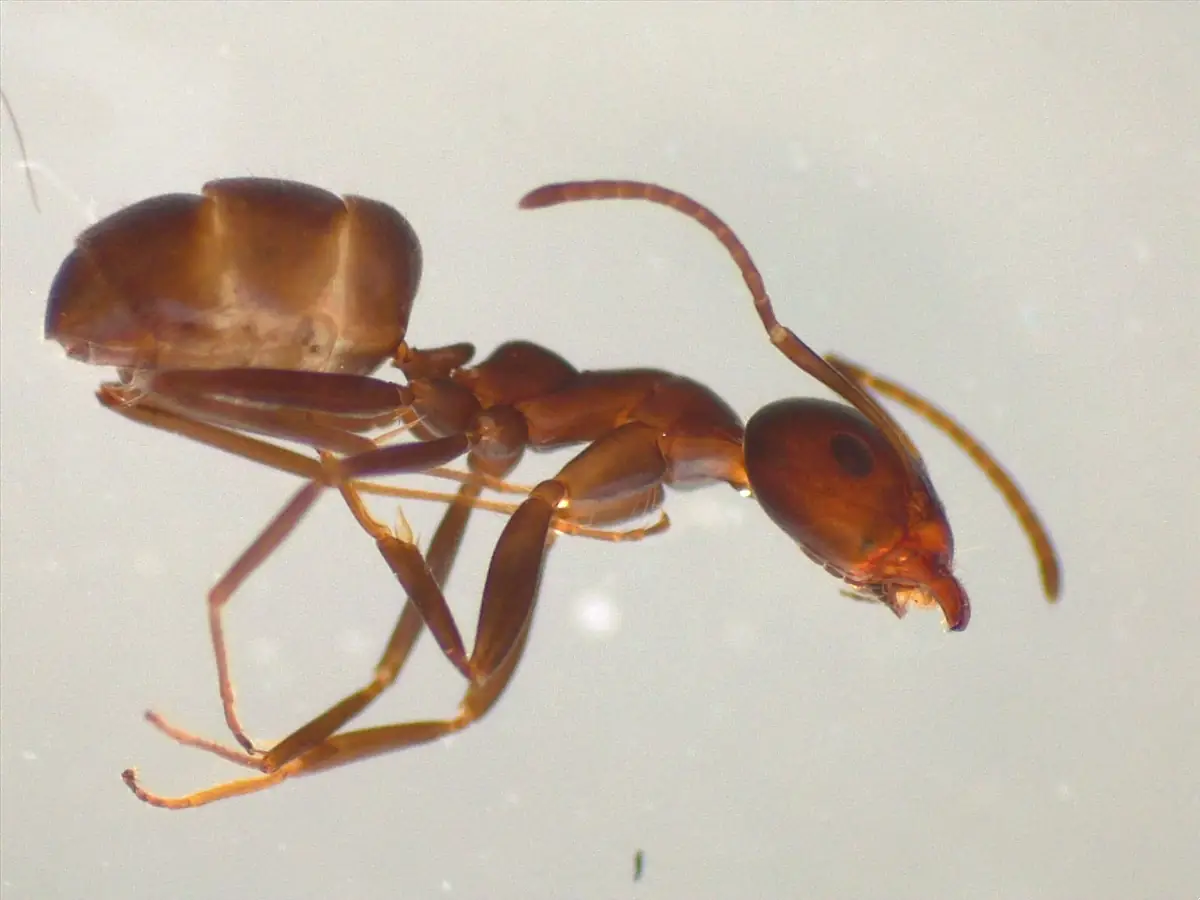
A neat brown line running along the bench to a smear of jam is the usual first sign. By December, many West Auckland households have met it. This page explains what we arrange when ants move in, which species are behind it and why the nest is nearly never where the trail is.
If you want the wider picture of what we cover, start at pest control across West Auckland.
Which ants are we talking about
Region-wide, the one most people complain about is the Argentine ant. DOC says it is known in many parts of Auckland, measures 2 to 3 mm, is honey-brown, travels in trails five or more ants wide, and in spring and summer has an insatiable appetite for protein and sweet foods.
Argentine ants are known in many parts of Auckland, are 2 to 3 mm and honey-brown, travel in trails five or more ants wide, and in spring and summer have an insatiable appetite for protein and sweet foods.
Source: Department of ConservationOther ants turn up as well: small black ones around sinks, larger ones in garden walls, and the occasional winged group in warm weather. Positive identification helps, because the bait differs. A photo on your phone, or one ant in a taped-over tube, is enough for the specialist to work with. The Argentine ant field note covers their yearly rhythm.
Why the trail is the least useful part
Spraying a visible trail kills the workers you can see and leaves the colony, which may include several queens and be spread over many nests. In our experience of similar areas, ants return within days. Argentine ant colonies can sprawl across a garden, a fence line and the neighbours' sections, so the trail you see is one thread of a bigger network.
A technician follows the ants back and looks at the likely entry points: gaps around pipes, the foundation edge, window frames and shared walls. Where possible, the plan treats both the outdoor perimeter and the indoor trail.
What brings them inside
Three triggers account for most calls:
- food and drink: sugar, pet food, honeydew from garden pests, a sticky bin;
- wet weather, when flooded nests send colonies looking for dry ground, covered in ants indoors after rain;
- dry spells, when ants head for moisture around taps and dishwashers.
West Auckland's mixed terrain adds to this. Bush-edge sections in Titirangi or Laingholm give ants garden walls, leaf litter and timber to nest in. Newer estates, such as those on the new-build estates page, have bare landscaping and shared boundaries that suit ants moving between sections. We read these as likely, not measured: no source gives local ant counts.
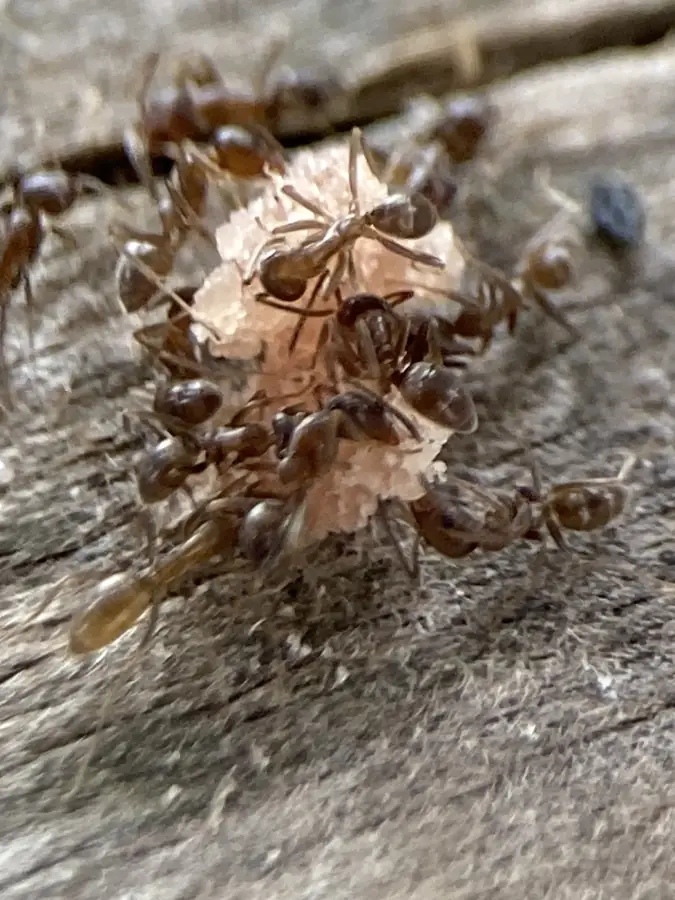
The treatment, in stages
Callback.
An assistant takes your details, and a specialist rings back to ask what you have seen and where.
Visit and identification.
A technician follows the trails, identifies the species and checks the outside walls and gardens.
Written quote.
You see the scope and price before work starts.
Treatment.
Typically a combination of baits and a residual perimeter treatment, applied to label directions.
Recheck.
Ants often keep coming for a few days. A follow-up shows whether the colony has collapsed or whether a second round is needed.
Baits work slowly on purpose: workers carry the product home. Please don't wipe away the trails with spray or strong cleaner during that time, because that breaks the delivery. Wipe up food residue instead. The safety and handling side is on safety and products.
What you can do this week
Wash sticky surfaces, keep pet food sealed, put the honey and sugar in lidded containers, and rinse recycling. Trim plants that touch the house wall, because they act as bridges. Seal gaps with silicone where you can see the trail enter. These steps reduce the draw, but they do not remove a nest.
Cost
The numbers below are indicative, were checked on 17 November 2026 and are not West Auckland specific. Professional Pest Manager lists a standard ant treatment at $180 to $350, and $250 to $450 or more for severe or multi-site infestations. Moneyhub says $200 or more in Auckland. One Auckland operator shows a starting price of $180. Our working range for a standard job is $180 to $350, and larger properties or repeated visits cost more.
Roaches, ants and spiders: what it costs lists every source. The technician quotes in writing after seeing the property.
Why are there more ants after rain?
Heavy rain floods nests, and colonies move to higher, drier places such as your kitchen. They tend to settle again when the ground dries out.
How long does a treatment take to work?
Bait programmes are slow by design, and ant numbers often fall over one to three weeks. Stubborn colonies may need a second visit.
Are ants dangerous?
Argentine ants do not sting and are not generally a health risk, but they walk over food and are a nuisance. They are a threat to native wildlife, which is why DOC covers them.
Can I treat the neighbours' side too?
We can only treat the property that books. Where a colony runs across boundaries, a chat with neighbours helps.
Arrange a visit
Phone 09 872 7624 and an assistant takes your details for a specialist callback, or use the callback form. If you want to know how a job runs before you commit, read what happens next.