Wasps in West Auckland
Wasps in West Auckland homes: how to recognise the problem, what a treatment involves and what the work tends to cost.
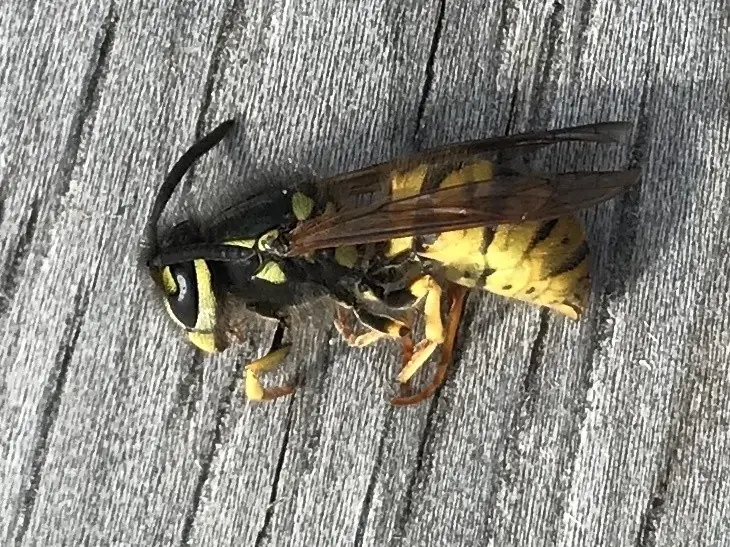
You have noticed a steady stream of wasps flying to the same spot in the wall, the lawn or the hedge. Before anything else, stay back and watch from a distance for a few minutes. Where they go tells a technician most of what they need to know.
This page is the overview for wasps across West Auckland, from the Henderson flats to the vineyards of Kumeū. It explains which wasps you are likely to be dealing with, how a visit works and what the work tends to cost. The detail on individual jobs sits on the pages it links to.
Which wasps are we talking about
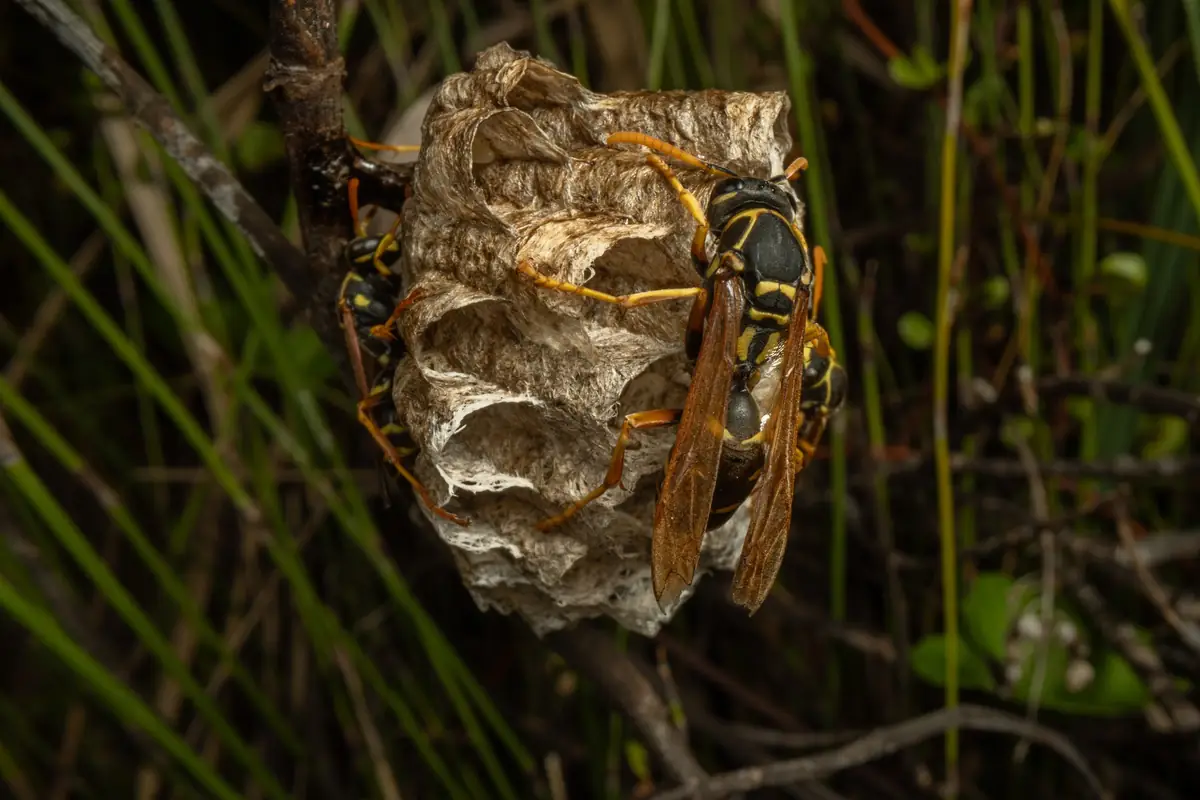
Two groups cause nearly all the calls. The German and common wasps build large paper nests that are often hidden: in the ground, in a wall cavity, under a deck or in a roof void. The Asian and Australian paper wasps build small open combs under eaves, in shrubs and on fences.
The Department of Conservation says New Zealand has some of the highest densities of German and common wasps in the world, because they have no natural predators here, winters are mild and food is plentiful. It also puts the Asian paper wasp nest at about the size of a pear.
DOC reports that German wasps arrived in the 1940s, and Auckland Council's pest register lists wasps as a whole-region sustained control species.
Source: Department of ConservationIf you are not sure which one you have, the article on telling German and Asian paper wasps apart walks through the differences in body shape, flight and nest.
Why the west sees so many
West Auckland has a lot of bush edge, stream corridor and old fruit-tree country, and wasps use all three. The Waitākere Ranges Heritage Area covers roughly 27,700 ha of public and private land, according to Auckland Council. Our reading is that large areas of bush and gardens give colonies plenty of nesting ground close to homes.
Fruit matters too. Oratia was settled with orchards and vineyards, and Kumeū and Huapai still have vines and lifestyle blocks. Ripe fruit, windfalls and open bins are all food. The wasp nests in vines and fruit trees note covers what turns up around harvest.
Community groups are working on the problem as well. Pest Free Piha says its wasp programme has 476 bait stations across Piha, and Pest Free Waiatarua runs wasp blitz weekends. That is useful on a wider scale, but a nest in your wall still needs its own treatment.
Signs you have a nest
- Wasps entering and leaving one small gap, hole or crack all day.
- A faint rasping or scratching noise inside a wall or ceiling.
- A brown stain spreading on plasterboard, which can mean the nest is pushing against it.
- A bare patch of lawn or bank with traffic going in and out of a hole.
- A grey paper ball or comb hanging from a branch, eave or fence rail.
A single wasp on your barbecue is not a nest. A line of them heading the same way is.
What we arrange
The visit is simple. A specialist rings you back after your call, a technician visits and works out the nest type and where it is, and you get a written quote before anything is treated. Most nests are dealt with in one visit. How that goes is set out in what happens next, and the products and safety rules are on the safety and products page.
Call or request a callback.
An assistant takes your address, the nest location and any allergies in the household.
A specialist rings you.
They confirm the pest from your description and book a visit.
Technician visit and written quote.
The nest is located, the access is checked and the price is written down.
Treatment.
Usually at dusk or dawn, when most of the colony is home.
Follow-up if needed.
A quiet nest after a day or two is normal; a busy one is worth a second call.
Pages for particular jobs
Open nests on eaves and branches, and nests inside walls and roofs, are covered in wasp nest removal. Nests in the soil have their own page, ground nests, because they carry different risks and the treatment differs.
For the timing question, why January to April feels so much worse than spring, read why wasps peak in summer and autumn.
Some suburbs have their own notes because the pressure there is a little different:
- Oratia, where old orchards and gardens still carry fruit trees.
- Waimauku, home of a nest DOC records as the largest ever found.
- Piha and Karekare, with its community bait programme.
- Laingholm and Kumeū, on the bush edge and in vine country.
The orchard and vineyard country page pulls the rural picture together.
What it tends to cost
These are estimates from public sources, checked 17 November 2026, and none is specific to West Auckland. One trade directory gives $120 to $250 for a standard nest and $200 to $350 where access is hard, such as a roof void or a height. A consumer guide gives $100 to $175 for a one-off removal. Several nests, or a nest that needs a ladder or scaffold, cost more.
We have no verified price for ground nests, so the specialist quotes after a look. The full breakdown, with sources, is on the wasp price guide, and the wider picture is in the price guide.
Safety first
Wasps sting repeatedly. If anyone develops swelling of the face or throat, difficulty breathing or collapses after a sting, call 111 immediately. Do not poke at nests, block entrances or spray fuel into them. Large nests and ground nests are not jobs for a garden-shop spray.
Can I treat a wasp nest myself?
A small, open paper wasp comb within easy reach can sometimes be handled with a hardware-store product, used exactly to the label. German and common wasp nests, and anything in a wall, roof or the ground, are best left to a technician. The colony can number in the thousands.
When is the best time to book?
As soon as you see a nest. Colonies grow through the season, so a nest found in November is far smaller than the same nest in March. Early treatment is quicker and usually cheaper.
Will the wasps come back?
The treated colony will not. A new queen can start another nest next spring in the same sheltered spot, so blocking old entrances and gaps once the nest is dead is sensible.
Do you treat hornets?
We deal with the wasps found in West Auckland homes. If you think you have seen something unusual, report it to the Ministry for Primary Industries rather than disturbing it.
Book a visit
Call 09 872 7624 and an assistant will take your details for a specialist callback, or book a callback online. If you want to see how the rest of the service works, pest control across West Auckland has the full list of pests and suburbs, and how we work explains who does what.