Wasps in Piha and Karekare
Piha has a wasp programme with 476 bait stations. If a village this size builds one, wasps are a serious annual fact of life on the coast.
Most West Auckland suburbs deal with wasps one nest at a time. Piha has an organised, village-wide effort, and the paperwork is public.
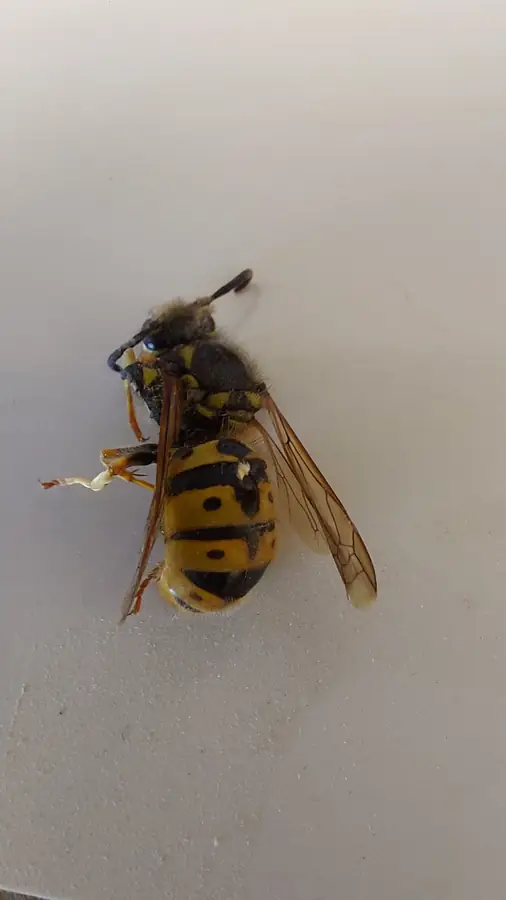
Pest Free Piha ran a wasp eradication pilot on Te Ahuahu Road that reduced wasp numbers there by an estimated 70%. The programme uses Vespex protein bait, deployed from around late February to mid-March, targets German and common wasps and not paper wasps, and aimed for at least an 85% success rate. Over 100 residents had responded.
Source: Pest Free Piha wasp update, January 2021A later article gives the scale.
The wasp programme has 476 bait stations installed across Piha. The article also describes ongoing rodent and possum trapping in the village.
Source: The Trusts, December 2025Karekare's own group, Karekare Landcare, lists wasps among its activities in the Alliance directory, without giving any detail, so we draw nothing further from it.
Why bait, not just nest removal
Protein bait works on a different principle from treating a nest. The Department of Conservation says Vespex bait works only in the warmer summer months, when wasps are collecting protein for the colony. Workers carry it home and the colony is affected. That timing matches the Pest Free Piha schedule of late February to mid-March.
For a household that matters in two ways. First, the best time to join a bait programme is before the late-summer peak. Second, bait stations are not designed for paper wasps, which the Piha programme does not target and which DOC describes as building small, pear-sized nests. A paper wasp nest under the eaves still needs treating directly.
A bush-and-dune setting
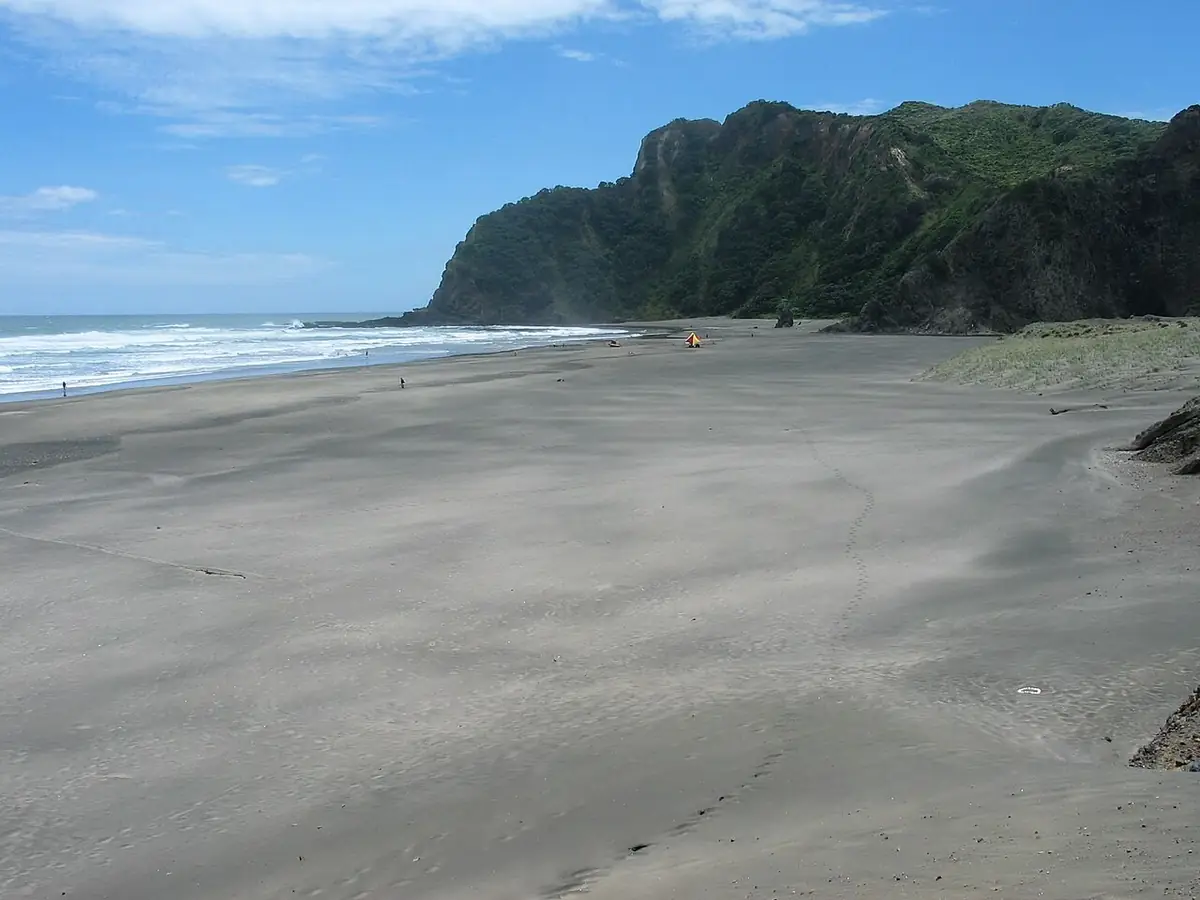
Council open data gives about 2,490 ha of Piha and 1,663 ha of Karekare in Significant Ecological Areas (measured 17 November 2026, boundaries generalised). Wikipedia puts Piha at 1,044 residents in 411 dwellings in 2023 (source). That is a small number of houses scattered through a lot of forest, and many nests will be well away from any house.
Our reading is that a wasp programme here is needed because nests in bush, banks and dunes cannot be found one at a time, and that the nests that matter to a household are the ones close to the house.
When a technician makes sense
- The nest is in a wall, roof void, subfloor or bank beside the house.
- The nest is high or hard to reach.
- You have tried the bait programme and wasps are still active at one point.
- Someone in the household has a sting allergy.
- The wasps are paper wasps, which the programme does not cover.
For the methods, see nest removal and ground nests. Do not block an entrance or use a torch beam on a nest at night.
What it costs
Published Auckland sources put a standard accessible nest at about $100 to $250, and hard-access nests at $200 to $350 (checked 17 November 2026). A remote property may be quoted differently. See the wasp price page.
Before the late-summer peak
If you want to take part in the programme, contact the group before the bait goes out in late February. Walk your section in January and note where wasps are feeding or flying in a line. Keep pet food and fruit covered outdoors, since both draw foraging workers. If a nest is already close to the house, deal with it directly and do not wait for the programme, because a colony beside a door or window is a safety question. The field note on wasp nests in vines and fruit trees shows where nests turn up in gardens.
Can I join the Piha programme and still call a technician?
Yes. They fit together. Tell the technician which bait stations are on your property.
Does the programme cover Karekare?
We only know that Karekare Landcare lists wasps among its activities. Ask the group what it offers.
Call
The Piha and Karekare suburb page covers the area, and the field note on why wasps peak in summer and autumn explains the timing. For rodents here, see rats in Piha and Karekare. Ring 09 872 7624. An assistant takes your details for a specialist callback, or use the callback form.
Sources for this page
Where a source describes the place rather than pests, the pest relevance is our own reading.