Pest control in Waimauku
Where the largest wasp nest on record turned up.
3.75 metres tall
The Department of Conservation says the world's largest recorded wasp nest was discovered at Waimauku, near Auckland, and was 3.75 metres tall and 1.7 metres wide. DOC adds that German and common wasp colonies are normally about the size of a soccer ball but can become huge if they survive winter.
The world's largest recorded wasp nest was found at Waimauku, 3.75 m tall and 1.7 m wide.
Source: Department of Conservation, waspsDOC does not give a date or an address, and we do not either. What the record shows is that a German wasp nest on rural land here can reach a size nobody would expect. The page on wasps in Waimauku takes that further.
What it means on your block
Look for nests in sheds, hedges, banks, old stumps and roof voids, particularly late in the season when colonies are largest. A nest that survived winter is the one to worry about, because DOC says that is how colonies become huge. A wasp nest should not be disturbed by an untrained person. The ground nests and nest removal pages explain how visits work, and the article on why wasps peak in summer and autumn helps with timing.
If you suspect an Asian paper wasp or a similar species, the Northland Regional Council says Asian paper wasps often build nests above ground on houses or other buildings, in trees or bushes, and can reach densities of more than 200 nests per hectare. Those nests are about the size of a pear, according to DOC, which is a quick way to tell them from a big German nest.
A big, wet, mostly farm suburb
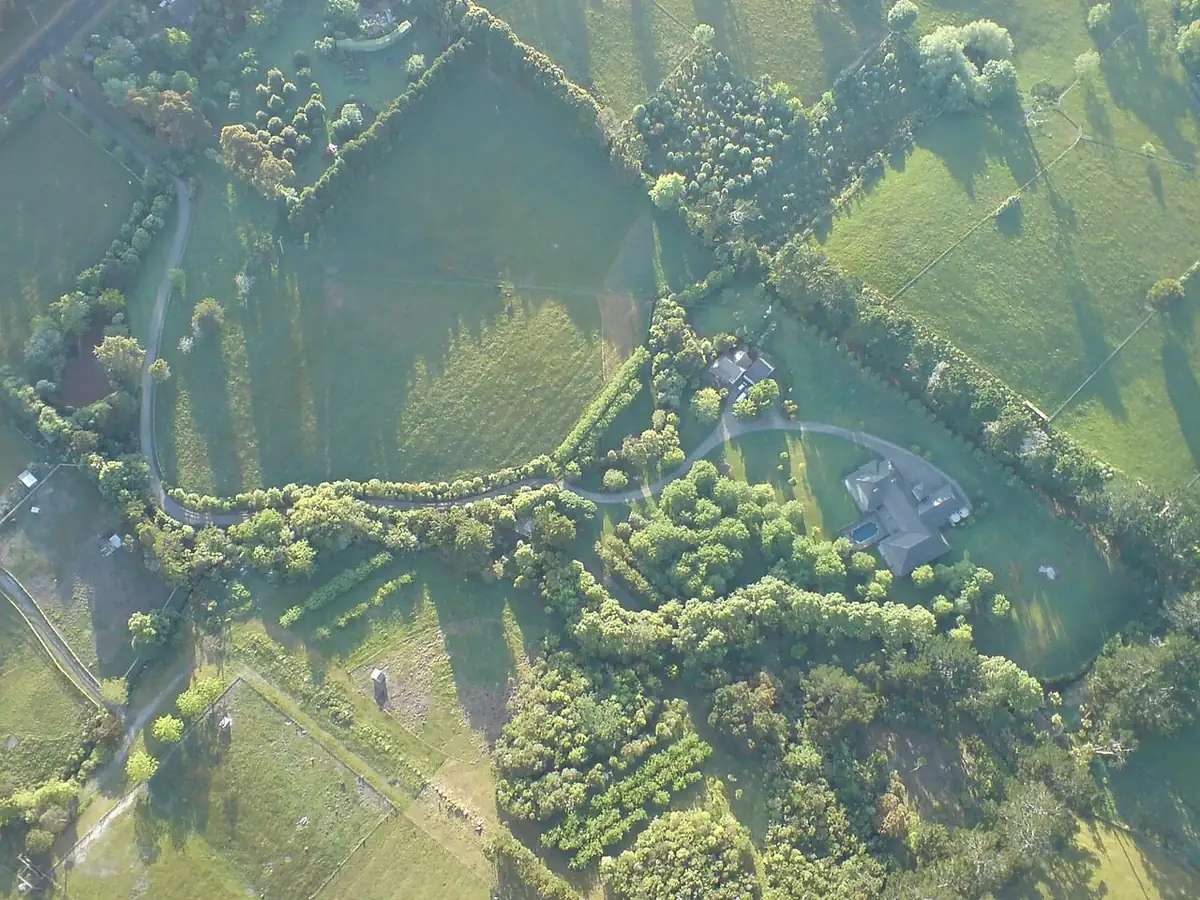
Auckland Council's GIS layers, checked on 17 November 2026, put 5,186 of Waimauku's 5,908 ha in Rural Production zone. Within that boundary 864 ha is flood plain, 575 ha is in a Significant Ecological Area overlay and 207.5 km of permanent stream runs through it.
Waimauku's boundary is about 5,908 ha, with 864 ha flood plain, 575 ha ecological overlay and 207.5 km of permanent stream. The suburb outline is generalised.
Source: Auckland Council open data, zones, flood plains and streamsRats follow farms
Wikipedia says the Waimauku Dairy Factory was established in 1909 to collect cream, and describes the settlement as formerly a farming and fruit-growing community. We found no pest record for rats at Waimauku, so there is no page for them. Our reading is that barns, sheds and stored feed on many properties suit rodents, as they do on farms everywhere, and that flood-plain margins push them toward buildings.
If you have a sheep or horse feed store, store it in lidded bins. The Kumeū page shows what we know about nearby lifestyle land, and the rodent hub explains treatment.
Orchard country
Waimauku's fruit-growing past sits close to the vineyard land around Kumeū. The page on orchard and vineyard country groups the district with Oratia, Kumeū and Huapai, because the wasp logic is the same.
Visiting a rural property
Large blocks take longer to inspect, and travel to Waimauku is longer than to Henderson. Tell the assistant about outbuildings, animals, access gates and dogs.
What a visit here involves
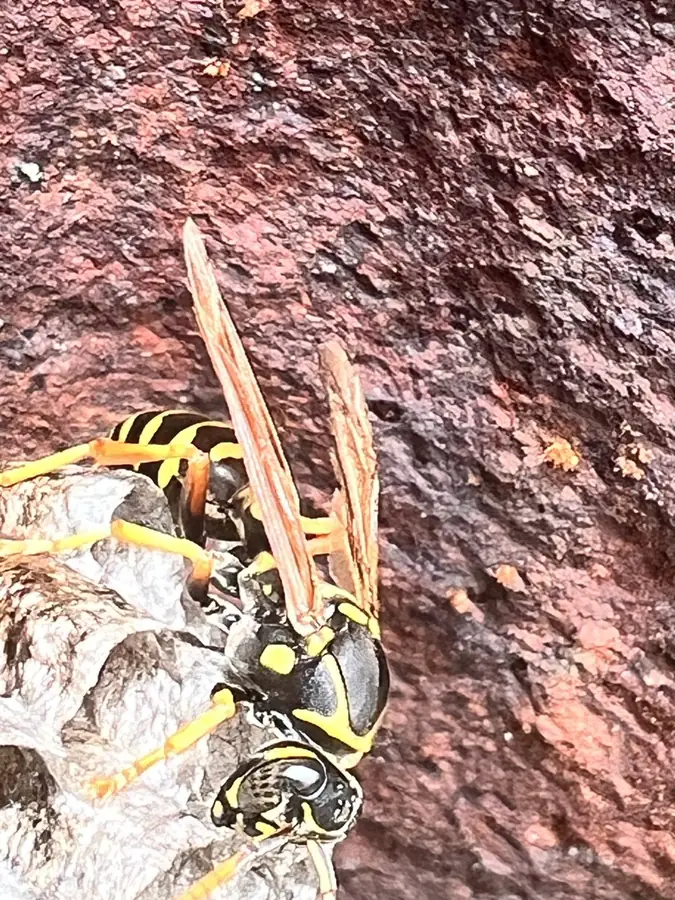
Rural wasp work begins with finding the nest, which can be in a bank, hedge, shed or roof void. The technician assesses access, size and the safest time of day to treat it, and explains where to keep people and animals while it is done. DOC says German and common wasp colonies can grow huge if they survive winter, so a long-established nest is treated with extra care. For rats, expect questions about feed storage and outbuildings. Give clear access details on the call, because distances are long and a missed gate costs a second trip.
Cost
A nest above ground is about $100 to $250, with hard-to-reach nests higher, and a standard rat or mouse treatment about $199 to $300. Seen on 17 November 2026; the wasp price page lists the sources.
Neighbours
Kumeū, Huapai and Helensville are the closest. The home page gives the full list of pests.
Report a nest
Call 09 872 7624 and tell the assistant where the nest is. A specialist rings back. The callback form is the online route.
Sources for this page
Where a source describes the place rather than pests, the pest relevance is our own reading.