Argentine ants: trails and spring surges
Why the trails appear in spring, where the nests really are and why spraying the line does not fix it.
Published
In this note
The first warm weekend of spring is when the question arrives: "Where have all these ants come from?" They did not arrive overnight. They have been in the garden through winter, and the warmth has switched the colony back on.
This note explains the annual pattern of Argentine ants as DOC describes them, why a trail across the bench is the end of a long supply line, and what is realistic for a West Auckland household. If you want the treatment side, the ant service page has it.
A small ant with a big footprint
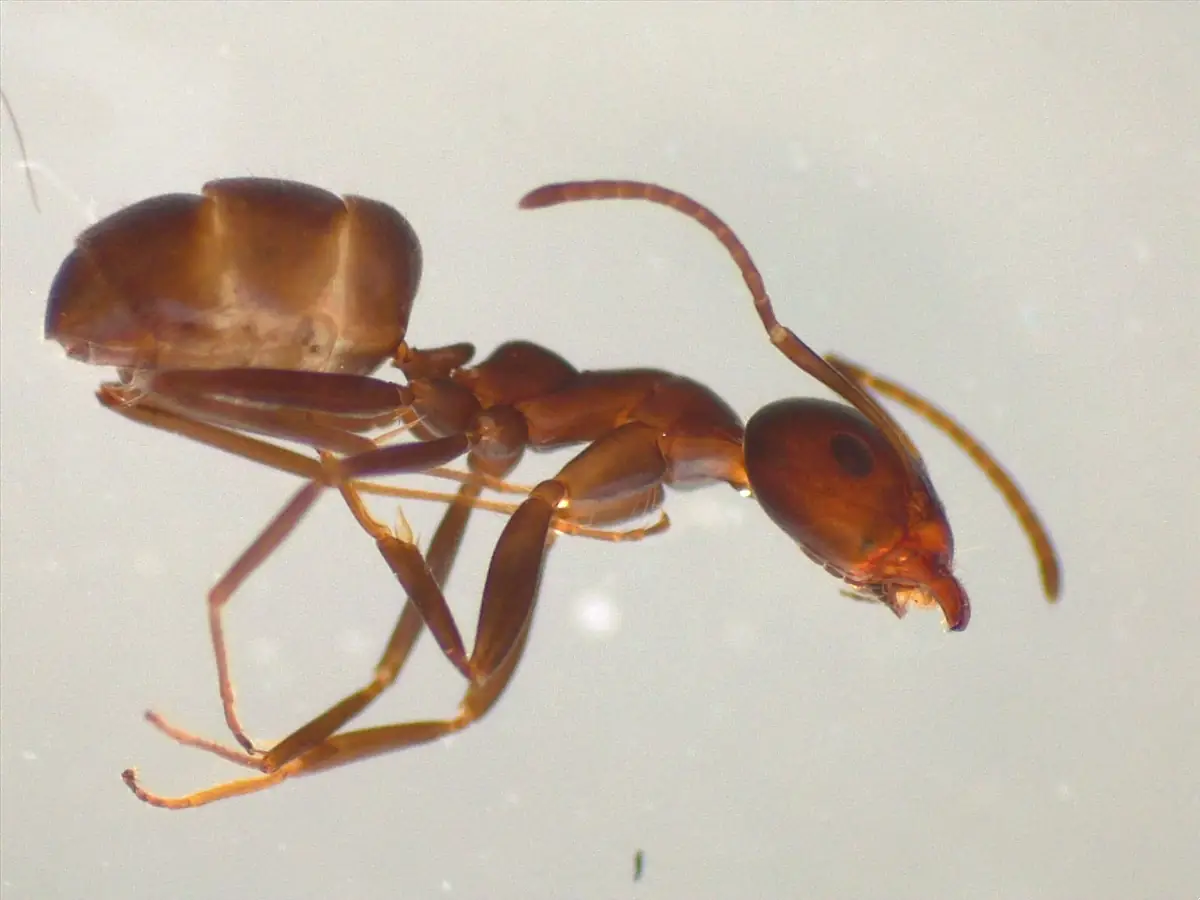
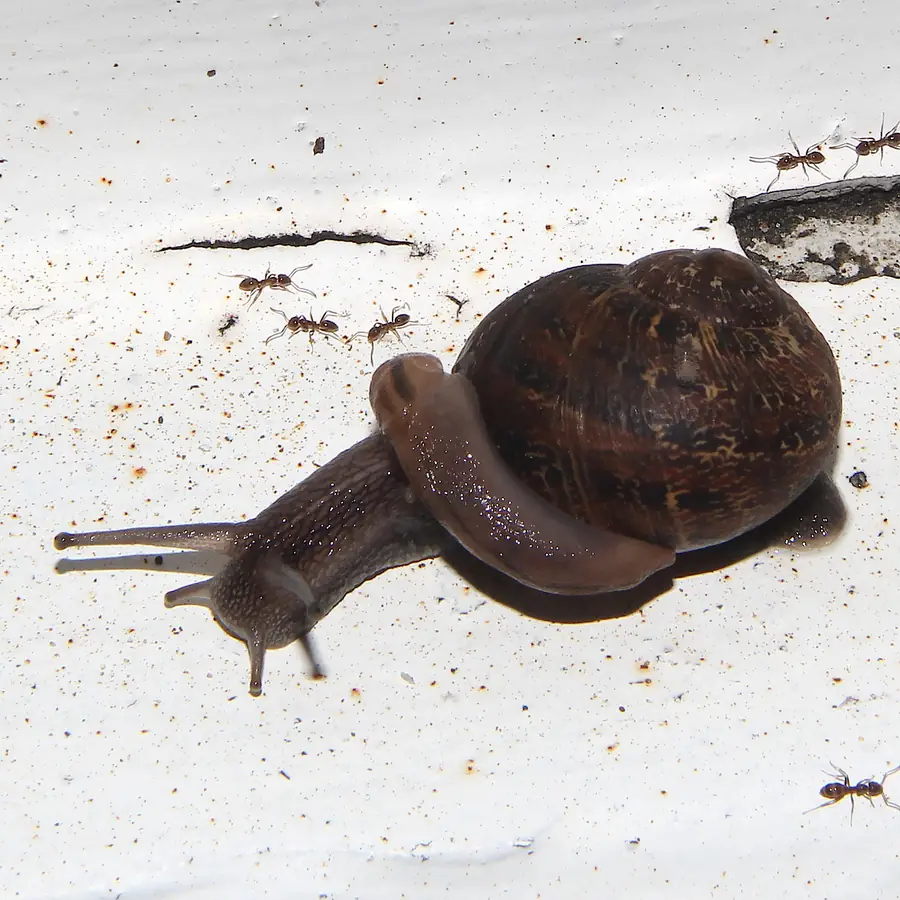
DOC identifies the Argentine ant as known in many parts of Auckland. Workers are 2 to 3 mm, honey-brown, and they travel in trails five or more ants wide. In spring and summer they have an insatiable appetite for protein and sweet foods.
Argentine ants are known in many parts of Auckland, are 2 to 3 mm and honey-brown, travel in trails five or more ants wide, and in spring and summer have an insatiable appetite for protein and sweet foods.
Source: Department of ConservationTwo phrases matter. "Trails five or more ants wide" means a heavy, steady flow, not a few scouts. "Protein and sweet foods" explains the mix of targets: pet bowls, a dropped sandwich, honey on a spoon, and the honeydew produced by sap-sucking insects on citrus and roses.
Why spring looks like a surge
Most households report ants from about October. Our reading of what happens is this: in cool months, ants cluster in sheltered spots with less foraging; as soil and walls warm, colonies grow, workers range further, and the demand for food rises. Any kitchen that offers an easy meal is added to the route.
The surge also reflects what we notice. A trail along a fence in July goes unseen, while a trail across a clean bench in November is noticed. It is both more ants and more visible ants.
Where the nest really is
People look for one nest. Argentine ant colonies are usually spread over many nests, with workers moving between them, and the trail in your house may lead to a wall cavity, a woodpile, a paved edge or a neighbour's garden. Spraying the trail, or the ants at the end of it, removes workers that were about to be replaced.
If you want to find the route, try this on a dry morning:
- Put a small blob of honey on a card near the trail.
- Watch which way the loaded ants walk back.
- Follow them as far as you can, noting where they go under cladding, through a gap in the concrete or into a garden bed.
Take photos and tell the specialist. A technician will do the same with more experience, and the clue to the entry point is often a gap around a pipe or window frame.
Disturbed ground sends ants moving
We don't have a source tying ant numbers to building work, so treat this section as inference. New developments disturb soil and break up nests, and a colony that is displaced often moves to the nearest sheltered spot, which can be a neighbouring house. West Auckland has a lot of building at the moment. The 2023 census counted 14,025 people in 4,977 dwellings in Hobsonville, up 177.9% on 2018, and 6,300 people in 2,091 dwellings in Whenuapai, up 70.5%.
The 2023 census counted 14,025 people in 4,977 dwellings in Hobsonville, up 177.9% on 2018. The Whenuapai article gives 6,300 people in 2,091 dwellings, up 70.5%.
Source: Wikipedia, HobsonvilleOur reading is that suburbs under construction, such as Hobsonville and Whenuapai, are more likely to see ants relocating, but no source measures that. The new-build estates page covers how the housing type changes pest pressure in general.
What actually reduces the surge
Some changes work, and some do not.
Helps:
- clean sticky spots, and rinse recycling before it goes in the bin;
- store honey, sugar and pet food in lidded containers;
- trim shrubs and vines that touch walls and eaves;
- fix the gap where you see the trail enter, once the ants are controlled;
- manage aphids and scale on garden plants, because honeydew feeds colonies.
Does not help for long:
- spraying the visible trail with a general surface spray;
- wiping the trail with vinegar, which clears the scent for a moment and reroutes ants;
- pouring boiling water down one nest entrance, since other nests continue.
Baits are the usual professional approach because workers carry the bait back and feed it to others. The sweet bait is only effective if the ants have no better food, which is why cleaning first matters. A technician will explain how long to leave baits alone. Handling and label information is on safety and products.
Neighbours matter
A fence line is no barrier for an ant colony. Where several houses on a street are seeing ants, a treatment on one section may only hold for a while. If you can, mention it to the neighbours when you book. We treat only the property that books, but a street-wide effort lasts longer.
What it costs, briefly
Indicative prices, checked on 17 November 2026 and not specific to West Auckland: Professional Pest Manager lists a standard ant treatment at $180 to $350, and $250 to $450 or more for severe or multi-site infestations. One Auckland operator lists a start price of $180. The price guide for roaches, ants and spiders shows the sources and what moves the number.
When to book
Book when trails return within a week of cleaning, when ants are in the pantry or around a baby's feeding area, or when the same wall has had them every spring. It is better to book in October than in January, when the colony is large. A technician visits, quotes in writing and treats to label directions.
Call 09 872 7624 and an assistant takes your details for a specialist callback, or book a callback. You can also look at the rest of our services on the the full list of pests we arrange page.
Call 09 872 7624, or book a callback and a specialist will ring you.
Call now Book a callback