Telling New Zealand cockroach species apart
Native, outdoor and indoor cockroaches need different responses. A plain guide to identifying what you have found.
Published
In this note
Size, colour and where you found it will tell you most of what you need. A cockroach in the bathroom drain at 2am and a cockroach under a log in the bush are two different problems, and sometimes the second is not a problem at all.
This guide helps you sort what you have found into four rough groups, so you can decide whether it needs a technician, a tidy-up or nothing. It is general guidance for people in West Auckland, and where the species is uncertain, a photo is the best way to settle it. Our cockroach service page covers what we arrange.
First, measure
Hold a ruler near the insect, or take a photo with a coin beside it.
- About 12 to 15 mm: likely German, or brown-banded if it is lighter and has pale bands.
- About 30 to 40 mm and reddish-brown: American or Australian cockroach.
- A broad, flat, dark insect found outdoors under bark or leaf litter: possibly a native species.
Size is a start, not a guarantee. Juveniles of the large species are small and can look like adults of smaller ones.
The German cockroach
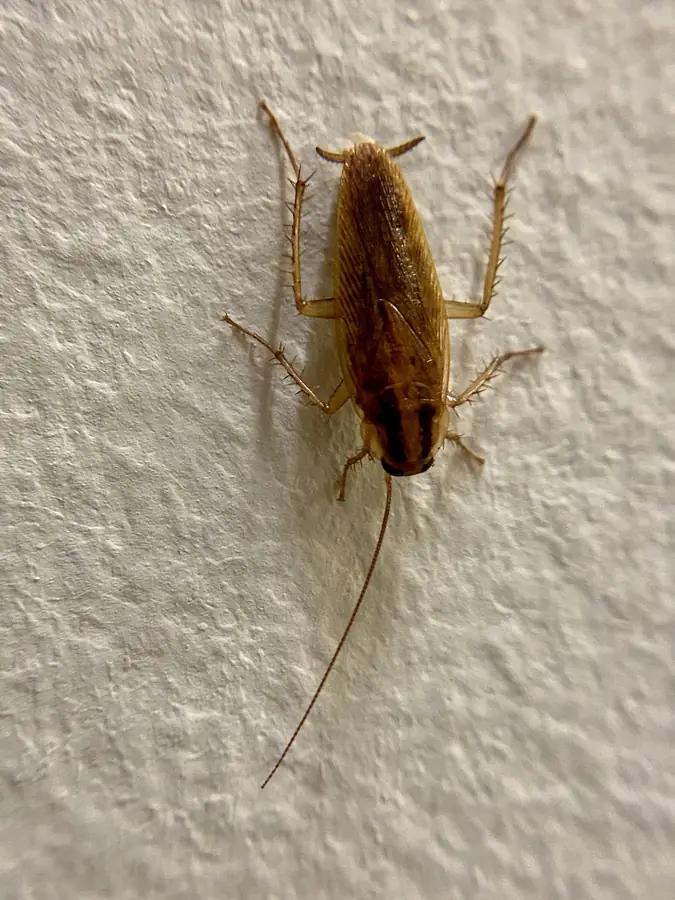
The German cockroach is tan to light brown with two dark stripes running along the shield behind the head. It is the typical kitchen and bathroom species, and it breeds indoors. It prefers warm, humid spots: behind the fridge, around the dishwasher, in the cabinet beneath the sink.
Its habit is the clue. If you turn on the light and a small cockroach darts for a crack, and you see more over a week, you are probably dealing with a breeding population, and a treatment plan is justified. The German cockroach page describes that job, and the apartments and takeaways note explains why it is harder in shared buildings.
The brown-banded cockroach
Similar in size to the German but without the long stripes, the brown-banded cockroach has two pale bands across the wings. It is less tied to water than the German and often lives higher up: in cupboards, behind pictures and in furniture, as well as in warm rooms in the house. Egg capsules are glued to surfaces rather than carried.
If you find small roaches in the bedroom and living room rather than the kitchen, this is worth considering. The treatment is similar to the German cockroach, but the search covers more rooms.
The American and Australian cockroaches
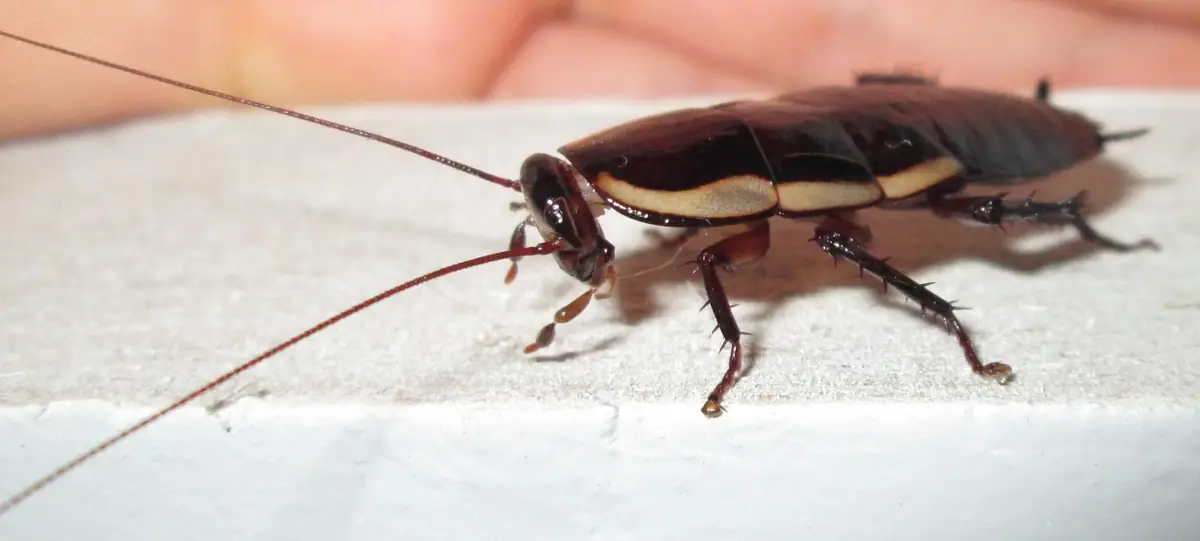
These are the big reddish-brown ones, up to 40 mm, which fly short distances. The American cockroach has a pale, figure-of-eight-like pattern on the shield behind the head. The Australian cockroach is similar, with a pale yellow edge along the front of each wing. Both like warm, damp, sheltered places, such as drains, wall cavities, roof voids, garden mulch and compost.
A large roach at ground level in the kitchen at night often entered from outside: through a gap under the door, up a drain or along a pipe. It does not mean you have an indoor colony. Sealing gaps, fitting drain traps and trimming vegetation off the walls often settles it. If you keep seeing them, a technician can check the roof void and subfloor. Auckland's mild, wet climate suits them, and the region's long-term mean rainfall of 1302 mm gives them plenty of damp, according to the Auckland Council report card.
The West Coast reporting area, which includes the Waitākere Ranges local boards, has a long-term mean rainfall of 1302 mm.
Source: Auckland Council State of Auckland report cardOur reading is that bush-edge and creek-side homes, such as those on the bush-edge homes and harbour and creek edge pages, are more likely to meet the large species coming in from outside, but we have no counts that prove it.
Native cockroaches
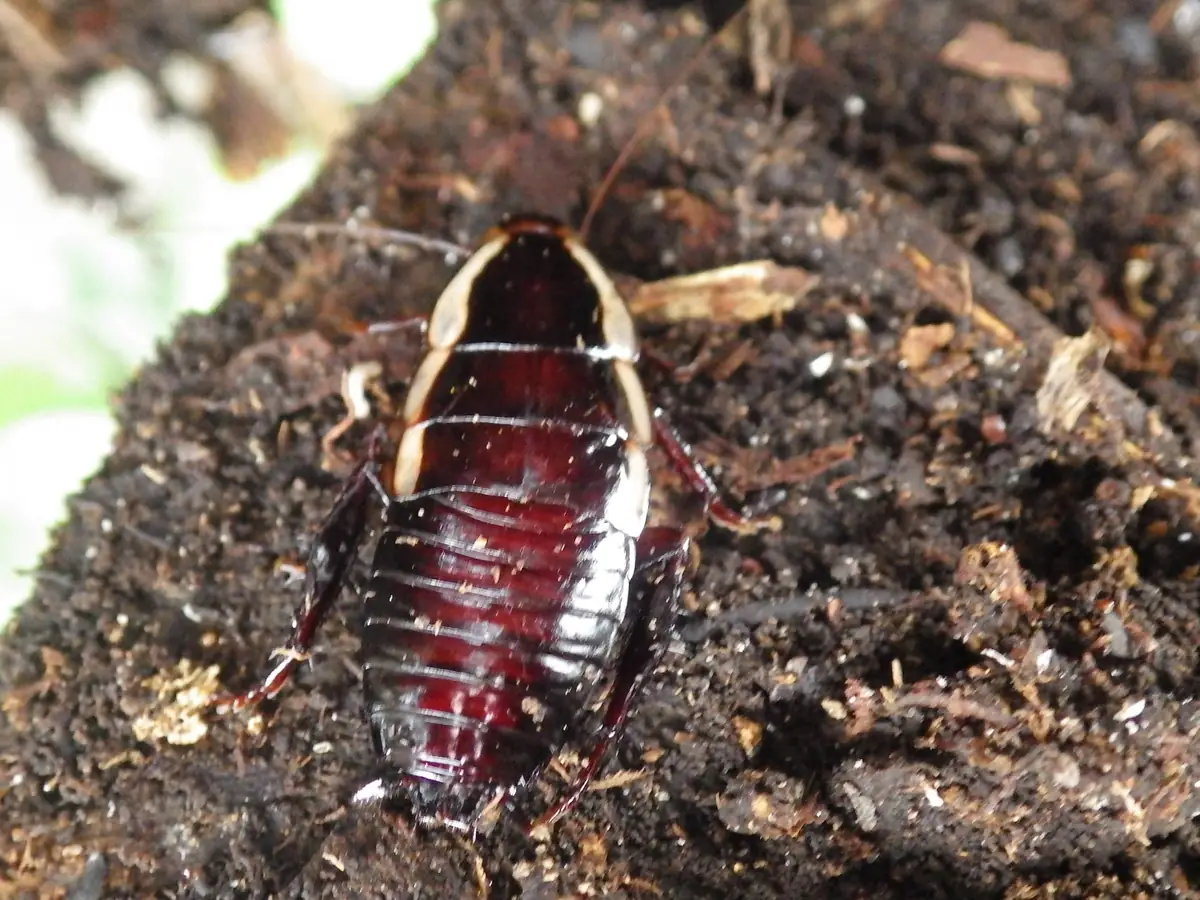
New Zealand has several native cockroach species that live in forest, leaf litter, under bark and in caves, and most are no threat to a house. They are not the insect that raids a pantry. A native roach on the path after rain, or on a window at a bush-edge property in Titirangi or Piha, is usually a wanderer. You can carry it outside in a cup.
If you are not sure, take a photo before you act. The specialist can look at a clear picture and tell you what it is. Please do not assume that every cockroach in the bush is a pest, since some native invertebrates are of conservation concern.
A short identification table
| What you see | Likely | What it usually means |
|---|---|---|
| Small, tan, two stripes, in kitchen or bathroom | German | Breeding indoors, treat |
| Small, banded wings, in higher rooms | Brown-banded | Breeding indoors, wider search |
| Large, reddish-brown, near drains, at night | American or Australian | Coming in from outside, seal and check |
| Flat, dark, found outdoors or on a bush-edge window | Native | Leave or relocate |
What the species tells you about treatment
Small indoor species call for baits in cracks and a recheck, because eggs survive the first round. Large outdoor species call for exclusion and, if numbers are high, a perimeter treatment around the house and drains. Natives need nothing. The answer changes the quote: the price guide for roaches, ants and spiders shows that figures were checked on 17 November 2026 and are not West Auckland specific. Professional Pest Manager lists a standard interior treatment at $215 to $400, and Moneyhub gives $200 or more with $40 to $75 per extra room.
Taking a useful photo
- Put a coin or ruler beside the insect.
- Take one picture from above, and one from the side.
- Note where and when you found it, and whether it was alive.
- If it is dead, put it in a small jar or tape it to a card.
Send the photo when the specialist calls back. That saves a visit when the answer is a wanderer.
Ask us
If you have found small roaches in more than one place, or you are seeing them in daylight, call 09 872 7624 and an assistant will take your details for a specialist callback, or book a callback. You can read about all our services on the all of our services page.
Call 09 872 7624, or book a callback and a specialist will ring you.
Call now Book a callback