Borer holes in villa subfloors: what they mean
Flight holes, frass and soft timber in older subfloors. How to read the signs and what an inspection looks for.
Published
In this note
Torch in one hand, hatch cover in the other, you slide in and shine the light across the bearers. There they are: neat little holes, dozens of them, peppered across the timber. Your heart sinks. Whether that is bad news depends on what the holes are doing, and the holes themselves are only half the story.
This note explains what you are looking at when you find borer holes in an older subfloor, how to tell old damage from active attack and what the signs do and do not say about the house. For the full overview, the borer in West Auckland page is the place to start.
What a flight hole is
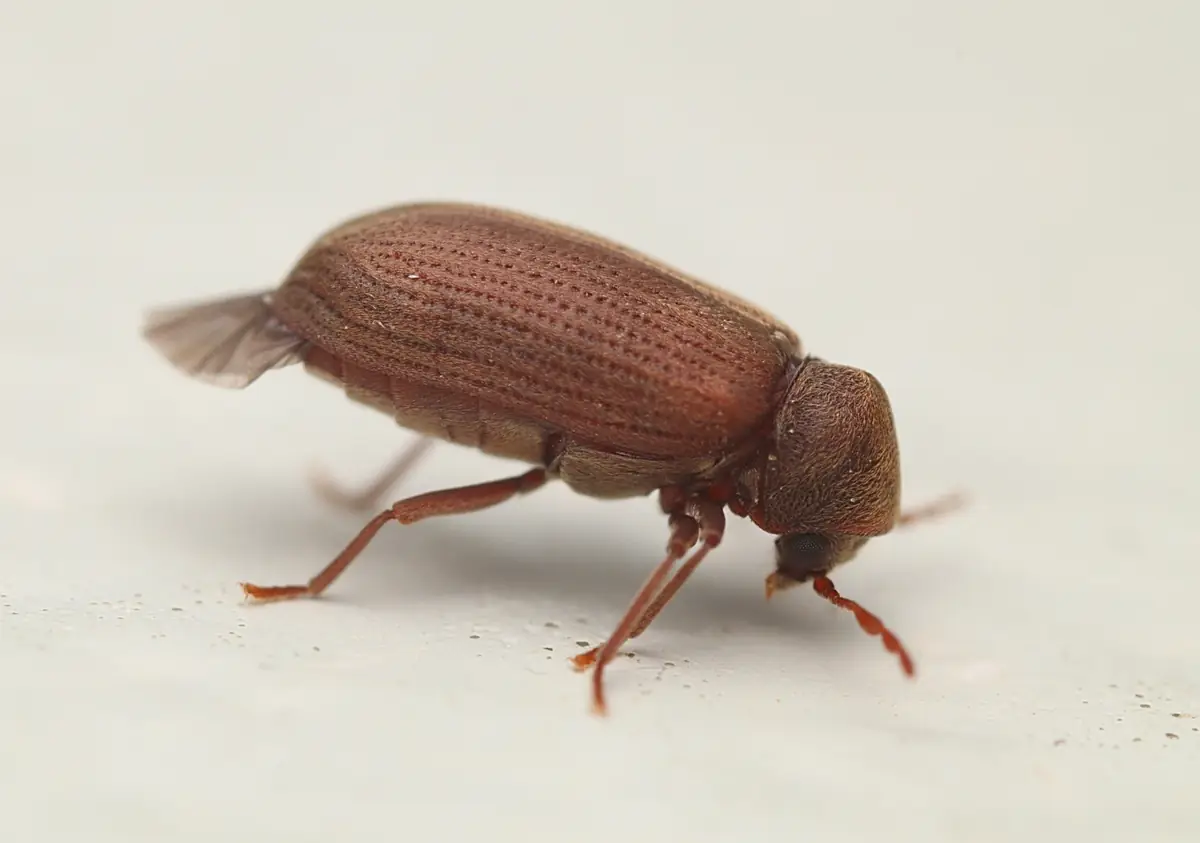
A borer larva lives inside timber for years, tunnelling as it feeds. When it matures it chews its way out and leaves a small round hole. That is the flight hole. The adult beetle flies off, mates and lays eggs in cracks and rough timber surfaces. The cycle starts again.
Consumer NZ says the common house borer is the most common of up to seven species, that adults fly for about a month between November and March and that larvae can feed for up to four years. So a flight hole marks the end of a stage that took years.
Consumer NZ says borer like moist untreated timber and are often found on the south side of buildings or in floor timbers because those areas are prone to damp.
Source: Consumer NZReading the signs
| What you see | What it likely means |
|---|---|
| Clean round holes, pale edges, no dust | Recent emergence, possible activity |
| Fine, pale, gritty powder under holes | Fresh frass, likely active |
| Dark, dusty, paint-filled holes | Old, probably inactive |
| Scattered holes in one patch of bearer | Local colony in damp timber |
| Holes everywhere, powder falling | Heavy infestation, get it checked |
| Timber that crumbles at the surface | Larval tunnelling has weakened it |
The key is the frass. Borer frass looks like fine sawdust but is more like gritty flour, and it falls from active tunnels. Wipe it away, come back in a week and see whether new powder has appeared.
Why villas show it
Older villas are mostly timber from the floor to the roof. Many have untreated timber under the house, because treated framing was not the norm when they were built. The subfloor is dark, often poorly ventilated and may have bare clay for a floor.
The Helensville community history site says the town has scores of old buildings, especially kauri cottages and villas close to the town centre. Auckland Council open data show the special-character overlay for older, pre-1944 housing covers 33 ha of Helensville. Our reading is that such housing is the likeliest in the area to carry old borer. The Helensville borer note looks at that more closely.
A Blockhouse Bay historical-society house history records a house built about 1897 to 1898 from pit-sawn kauri weatherboards with kauri floorboards, extended in 1920. That is a good reminder that old houses are mixed: original timber, additions, repairs and alterations from different decades. Each part may have a different history of treatment and damp.
Active, old or both
Most older subfloors have both. A bearer may carry old flight holes from decades ago and a fresh patch on the south side, near a leaking pipe. A technician will look at the pattern.
Signs of past treatment are also a clue: a faint white or greenish stain on the surface, a smell of chemicals or old spray marks on the underside of the floor. Previous treatment does not mean no borer today, since new timber or new damp gets in.
How the damage matters
A few holes in a floorboard are cosmetic. Holes in a bearer or joist are more serious, because those carry the floor. Soft or crumbling timber at the ends of joists, where moisture collects, is worth a builder's eye. The technician can tell you where the signs are but not whether the structure is sound. That is a builder's or engineer's call.
A reasonable test is this. If you can push a screwdriver more than a few millimetres into the surface with moderate force, the timber is weak and you should say so on the callback. Do not do this to structural members you are unsure about, and do not cut into them.
What an inspection does with the holes
The technician looks at the whole subfloor, the roof space where relevant and the timber on the south side, taps and probes it and notes the moisture. The result is a written summary. Borer inspection covers the process step by step.
If treatment is advised, subfloor treatment explains what happens next. Pricing is in the borer price guide, where you will see that the only published figure we found is an operator's "from" price of $199 for borer treatment (checked 17 November 2026), and that inspection and subfloor prices are not verified.
What to do before anyone comes
- Photograph the holes and powder with a coin or ruler for scale.
- Mark fresh powder spots with a pencil and note the date.
- Check for leaks, dripping pipes and blocked vents.
- Clear the path to the hatch.
- Do not paint, fill or seal holes yet. That hides the evidence.
A note on pole and bush-edge houses
Titirangi houses were sometimes raised on poles so they could be built among bush without damaging tree roots, according to Wikipedia. The subfloor is open to the air, but it can also be damp and shaded under tree cover. See Titirangi and the bush-edge homes page for the pattern.
How many holes mean a problem?
There is no magic number. Fresh powder and holes in structural timber matter more than the count.
Will borer spread to my furniture?
Common house borer can attack furniture and old timber items inside the house. If you see holes in a piece of furniture, check it and tell the technician.
Can painting over holes stop borer?
No. Paint hides the evidence and may seal in the larvae.
Does treatment fill the holes?
No. The holes remain as a record. If the timber is unsound it needs replacement.
Arrange a look
Call 09 872 7624 and an assistant takes your details for a specialist callback, or book one online. The the home page homepage lists our other services too.
Call 09 872 7624, or book a callback and a specialist will ring you.
Call now Book a callback